Read: Linked Lists Summary:
What is a Linked List?
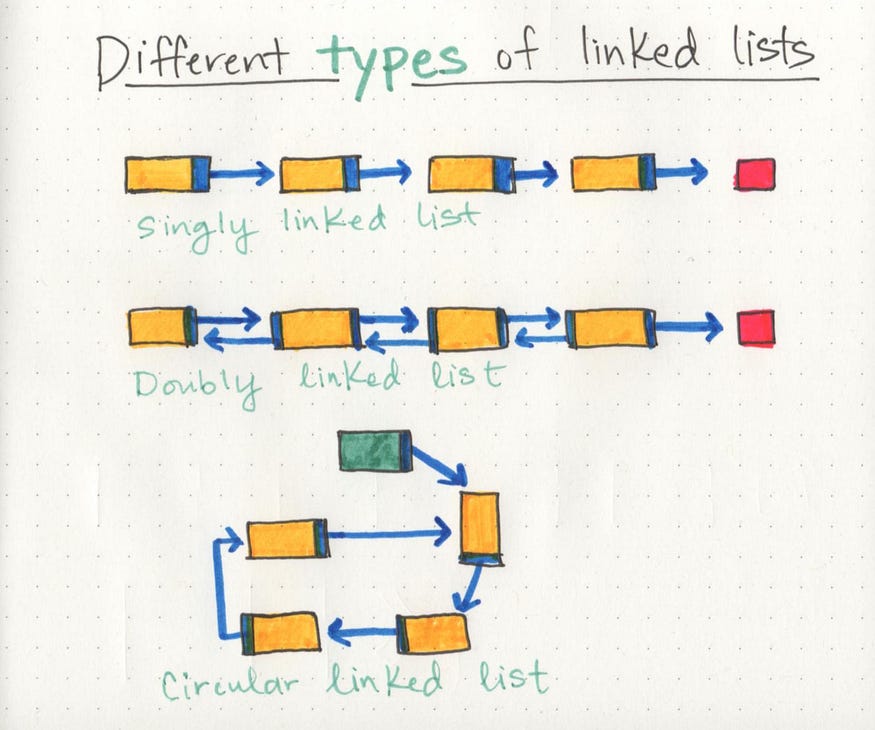
- A Linked List is a sequence of Nodes that are connected/linked to each other. The most defining feature of a Linked List is that each Node references the next Node in the link.
- There are two types of Linked List - Singly and Doubly.
- Singly : Singly refers to the number of references the node has. A Singly linked list means that there is only one reference, and the reference points to the Next node in a linked list.
- Doubly - Doubly refers to there being two (double) references within the node. A Doubly linked list means that there is a reference to both the Next and Previous node.
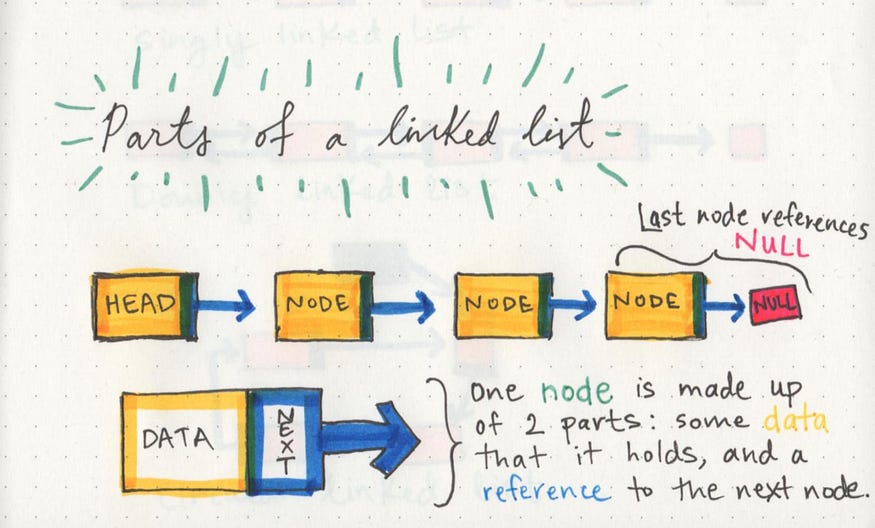
- Node - Nodes are the individual items/links that live in a linked list. Each node contains the data for each link.
- Next - Each node contains a property called Next. This property contains the reference to the next node.
- Head - The Head is a reference of type Node to the first node in a linked list.
- Current- The Current is a reference of type Node to the node that is currently being looked at. When traversing, you create a new Current variable at the Head to guarantee you are starting from the beginning of the linked list.
-
- The Next property is exceptionally important because it will lead us where the next node is and allow us to extract the data appropriately. The best way to approach a traversal is through the use of a while() loop. This allows us to continually check that the Next node in the list is not null. If we accidentally end up trying to traverse on a node that is null, a NullReferenceException gets thrown and our program will crash.
- Traversal Example:
- Let’s put a use case on our traversal. We want to check whether or not our LinkedList Includes a specific value. ``` The pseudo-code for an Includes is as so:
ALGORITHM Includes (value) // INPUT <– integer value // OUTPUT <– boolean
Current <– Head
WHILE Current is not NULL IF Current.Value is equal to value return TRUE
Current <-- Current.Next
return FALSE ```
-
The Big O of time for Includes would be O(n). This is because, at its worse case, the node we are looking for will be the very last node in the linked list. n represents the number of nodes in the linked list.
- The Big O of space for Includes would be O(1). This is because there is no additional space being used than what is already given to us with the linked list input.
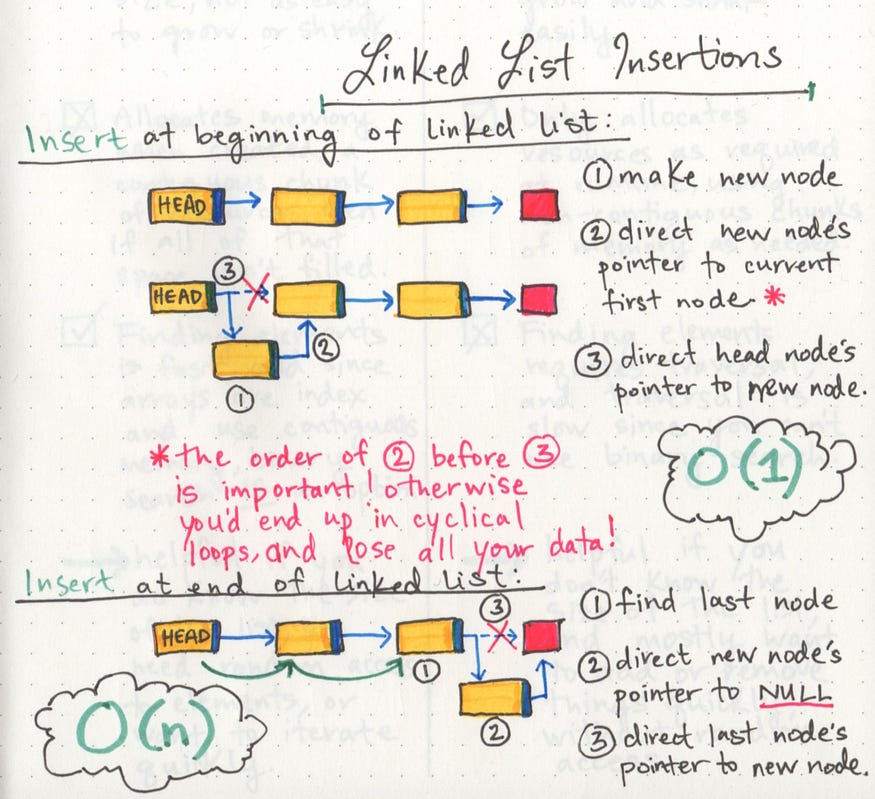
- When constructing your code, a few things to keep in mind» When making your Node class, consider requiring a value to be passed in to require that each node has a value.
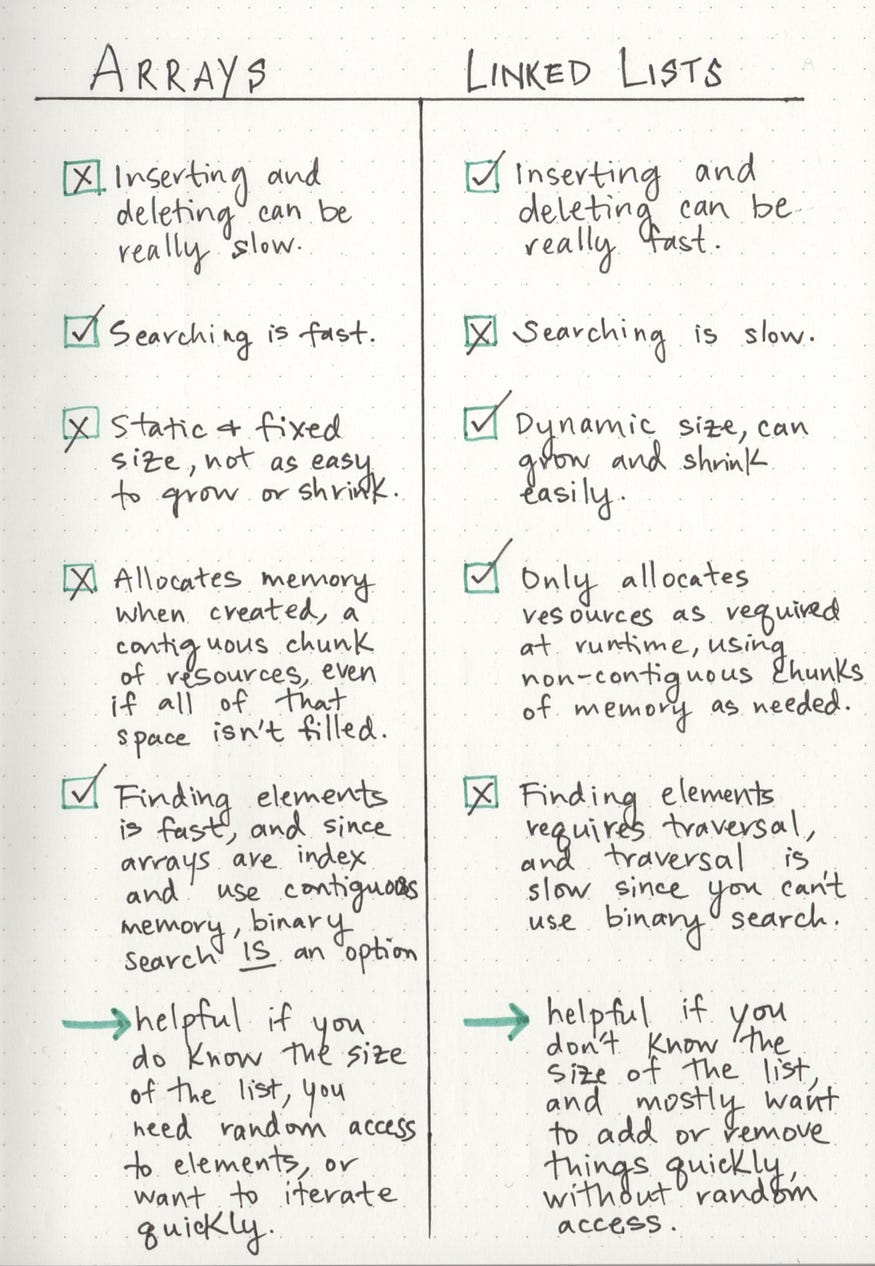
array vs .linked list